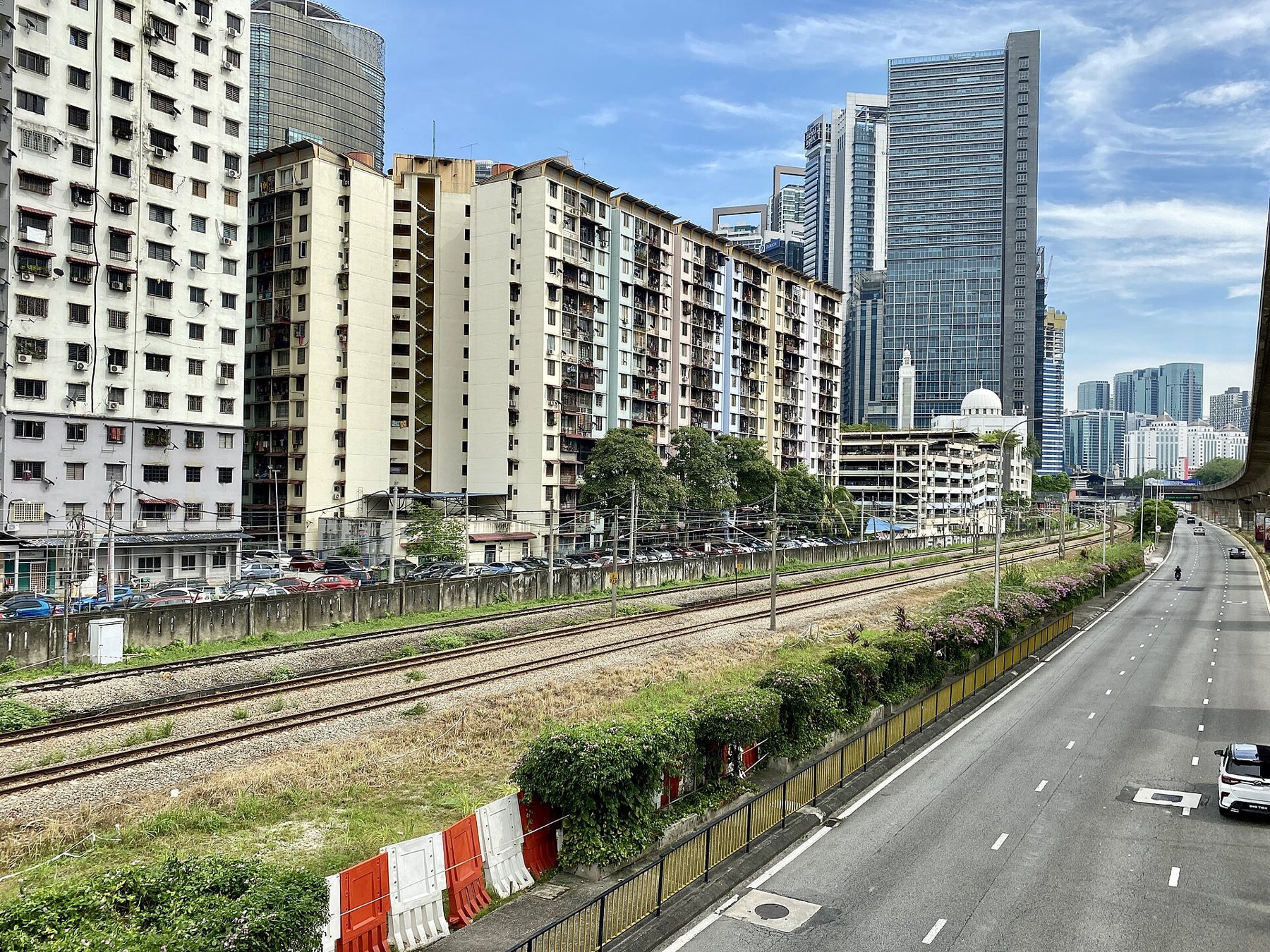
In a month's routineWalk down to Bangsar Baru for breakfast, ride the LRT into town for errands, and keep Sunday evening for the night market on the car park by Jalan Telawi.
For a first month in Kuala Lumpur, Bangsar is the kind of neighbourhood that makes everything feel manageable. It lies a few kilometres southwest of the city centre, on a cluster of low hills with tree-lined residential streets, a busy little commercial heart and a railway station at the foot of the hill. It is popular with Malaysian families, young professionals and long-stay foreigners, and it has the services, food and green space to make daily life easy without the noise of the centre.
The lie of the land
Bangsar is not one place but several. The older residential area spreads over the hills, with large houses, apartment blocks and condominiums set among big rain trees and gardens. In the middle sits Bangsar Baru, a compact grid of shophouses and low commercial buildings around a few streets, packed with cafés, restaurants, bakeries, grocers, clinics and small shops. To the south, Bangsar South is a newer district of office towers and apartments, with a different, more corporate feel.
The hills are real. Walking from the LRT station up to Bangsar Baru takes about fifteen to twenty minutes and climbs steadily, along roads that are not always friendly to pedestrians. Many residents use buses, ride-hail apps or the feeder services for that last stretch, especially in the midday heat or the afternoon rain.
Daily life in Bangsar Baru
Bangsar Baru is where the neighbourhood comes together. In the mornings, people queue for breakfast at kopitiam and mamak eateries, grab coffee and do their shopping. Supermarkets, pharmacies, laundries, gyms and banks are all within a few blocks. In the evenings, the streets fill with diners, and the restaurants cover a wide range of food and prices, from simple local eateries to more expensive places.
It is easy to fall into a routine here: a regular breakfast spot, a favourite fruit seller, a laundry that knows your name by the second week. That ease is the main reason many people choose Bangsar for their first month.
The Sunday night market
Every Sunday evening, a pasar malam, a night market, sets up on a car park in Bangsar Baru, with rows of stalls under bright lights selling fruit, vegetables, snacks, grilled meat, local cakes and household goods. It is busy, friendly and a good introduction to the night markets that move around the city through the week. Bring cash and a bag, and go hungry; the grilled chicken wings, the fresh juices and the pancakes folded around peanuts and sugar are favourites. Market days and locations can shift; ask locally if you cannot find it.
Getting about in Bangsar
The LRT Bangsar station, on the Kelana Jaya Line, sits at the bottom of the hill near the main road, and from there trains run to KL Sentral in one stop and on into the city centre, KLCC and beyond. KL Sentral is the city's main rail hub, with connections to the MRT, the Monorail, the airport trains and long-distance services.
Next door, Mid Valley, a huge commercial and office area, has its own station on the KTM Komuter suburban line. Buses serve the main roads, and ride-hail is widely used. For more on how the network fits together, read which line goes where.
Green space and quiet
For all its convenience, Bangsar remains green. Large trees shade many streets, gardens surround the older houses, and small parks are scattered through the area. Further west, the forested hills of Bukit Kiara and the neighbourhood of Taman Tun Dr Ismail offer trails and parks within a short drive. In the evenings, once the restaurants of Bangsar Baru wind down, the residential streets are quiet, with the sound of insects in the trees and the distant hum of the city.
That ease is the main reason many people choose Bangsar for their first month.
Food for every hour
Bangsar's food covers the whole range of Malaysian eating. Mamak eateries, run by Indian-Muslim families, serve roti canai, nasi kandar and sweet pulled tea from early morning to late at night, some around the clock. Chinese coffee shops offer noodles, toast with kaya jam and strong coffee. Malay stalls sell nasi lemak wrapped in banana leaf. Alongside them, cafés, bakeries and restaurants serve food from around the world. In a month, you can eat a different breakfast every day without leaving a few streets.
Groceries are easy too. Supermarkets stock both local and imported goods, and small shops and the weekly market sell fresh fruit, vegetables, herbs and spices. Tropical fruit in season, from mangoes and rambutans to the notorious durian, is one of the joys of a long stay. Many residents also use delivery services for groceries and meals, especially on wet evenings.
Working from Bangsar
Many people who stay a month are working remotely, and Bangsar is well set up for it. Cafés with good coffee and power sockets are everywhere, shared workspaces operate in the area, and internet connections in most apartments are reliable. The time difference matters: Malaysia is eight hours ahead of Greenwich time, which suits work with Asia and Australia and means early mornings or late evenings for calls with Europe and the Americas.
Bangsar housing, in general terms
Housing in Bangsar ranges from older landed houses and walk-up apartments to newer condominiums with pools and security, and prices vary widely with size, age and facilities. Shorter stays are usually in serviced apartments or furnished units. Proximity to the LRT station or to Bangsar Baru matters a great deal for daily life, especially given the hills and the heat. Visit at different times of day before settling on a street, and walk the route to the station once in the heat of the afternoon before you commit.
A note on the heat
Kuala Lumpur is hot and humid all year, with daytime temperatures usually in the low thirties Celsius and nights that rarely drop much below the mid twenties. In Bangsar's hills, that heat makes walking uphill at midday hard work. Most residents shift their walking to the early morning and evening, carry water, and treat air-conditioned spaces as part of the route. Give yourself a few days to adjust; most people find the heat easier by the second week.
When Bangsar suits you, and when it may not
Bangsar suits people who want a calm, comfortable base with good food and an easy routine. It may feel a little removed if you want to be in the middle of the old city's street life or its nightlife every evening; for that, Bukit Bintang or Brickfields might suit better. Many people start in Bangsar and move somewhere livelier once they know the city, and many others stay for years.
Every photo on this page was shared under an open licence. Names, licences and original files are on pictures on the tags.