In a month's routineCome for supper after sunset most weeks, walk the lanes in the cool early morning, and plan a visit around the Ramadan food bazaar if your month falls in it.
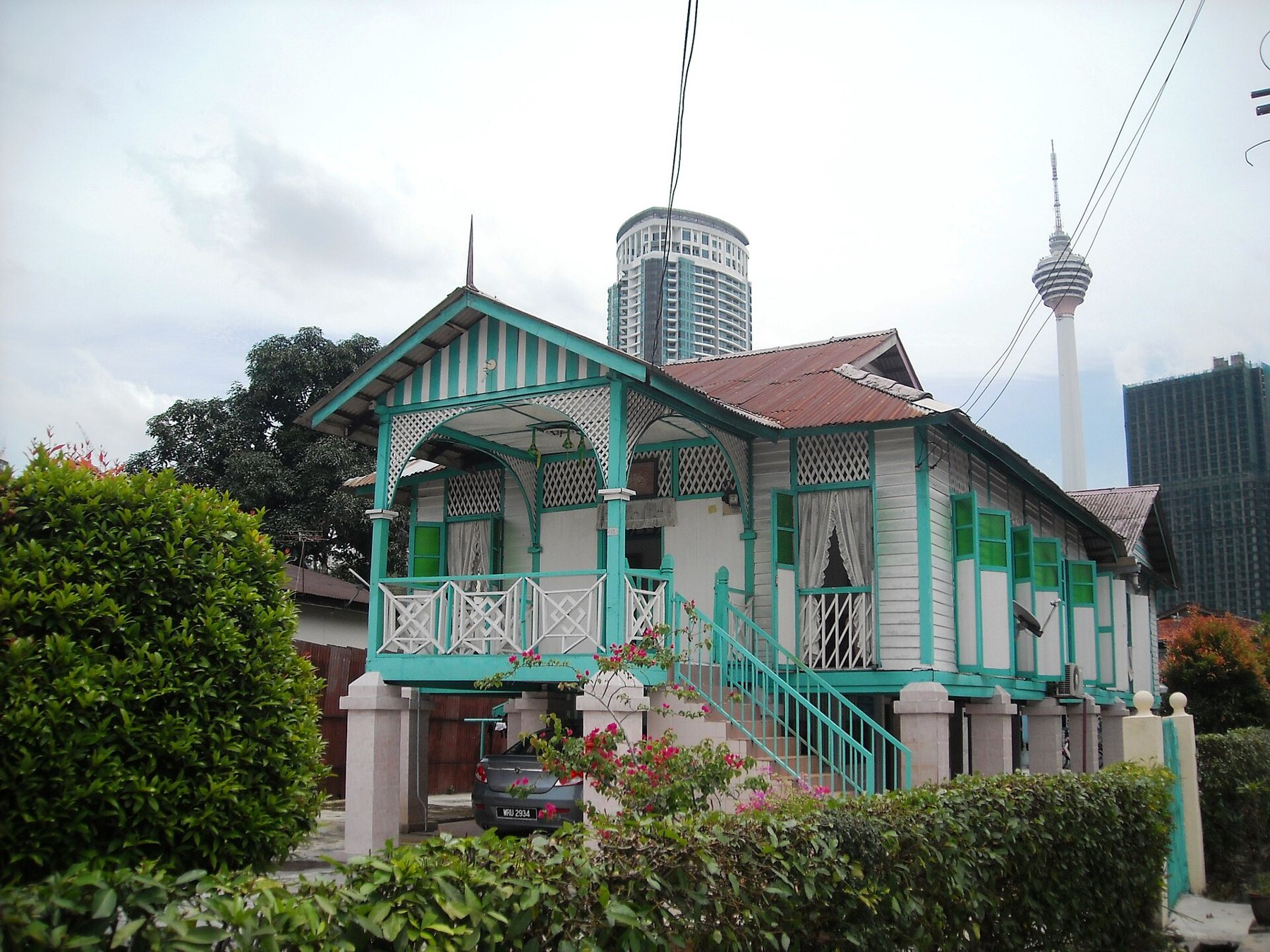
Stand on the footbridge over the Klang River in the evening and look one way, and you see the Petronas Towers glittering against the sky, ringed by glass skyscrapers. Look the other, and you see the dark roofs of wooden houses on stilts, coconut palms and the green dome of a mosque. This is Kampung Baru, a Malay settlement founded more than a century ago in what was then the edge of Kuala Lumpur, and now one of the most remarkable neighbourhoods in any Asian capital.
A village in the city
Kampung Baru, which simply means new village, was established at the end of the nineteenth century, when the British colonial administration set aside land as a Malay Agricultural Settlement, intended to give Malays a place to live and farm near the growing town. The land has remained largely in the hands of Malay families, held under special rules, and the community has kept a strong identity. Around it, the city grew up, and the land beneath the old houses became some of the most valuable in the country.
For decades there have been plans and pressures to redevelop the area, and new towers have begun to rise at its edges. Many residents have mixed feelings, torn between the value of their land and the life of the kampung. Visiting now, you see a neighbourhood in transition.
The wooden houses
The traditional Malay houses of Kampung Baru are built of timber, raised on stilts to keep them cool, dry and safe from floods and animals, with steep roofs, wide windows, carved panels and verandas. Some are beautifully kept, painted in bright colours, with gardens of fruit trees and flowers; others are old and weathered. Concrete houses and newer buildings stand among them.
Walking the lanes is the best way to see them, especially in the early morning or late afternoon, when the light is soft and the heat has eased. These are private homes, so admire them from the street, keep your voice down and ask before photographing people.
These are private homes, so admire them from the street, keep your voice down and ask before photographing people.
The mosque and the rhythm of prayer
At the heart of the community stands the Kampung Baru mosque, one of the oldest in the city, rebuilt and extended over the years. The call to prayer from its minaret marks the hours of the day, and on Fridays the streets around it fill with men going to midday prayers. Visitors should dress modestly in the area, particularly on Fridays, and enter mosques only at appropriate times, with shoulders, arms and legs covered, and women with hair covered; robes are sometimes available.
Food after dark
Kampung Baru is famous for its food, especially in the evening, when stalls and simple restaurants along the main roads serve Malay dishes until late: nasi lemak, coconut rice with sambal, anchovies, peanuts and egg; satay grilled over charcoal; mee goreng and nasi goreng; grilled fish; and sweet desserts of coconut, palm sugar and rice. Many places are open late into the night, and the area is a favourite for supper. Office workers come straight from the towers across the river, and on weekends whole families arrive after dark to eat at long shared tables under strings of lights.
During the fasting month of Ramadan, a large food bazaar sets up in the area in the late afternoon, selling dishes for breaking the fast at sunset. It is crowded, festive and a wonderful introduction to Malay food. Remember that many people are fasting during the day, and be discreet about eating and drinking in public then.
The footbridge to KLCC
A pedestrian bridge, the Saloma Link, crosses the river and the busy roads between Kampung Baru and the KLCC area, its curving form lit with changing colours at night. It has made the walk between the village and the towers much easier, and it is a popular spot for evening views of the skyline. On weekend evenings, families and couples stroll across it and stop to photograph the towers framed by the old village roofs. Named after a famous Malaysian singer of the mid twentieth century, it is a symbol of the meeting between old and new.
Neighbours and community life
Kampung Baru is a residential community first. Families have lived here for generations, children play in the lanes in the evening, and neighbours gather on verandas and at the mosque. Weddings, called kenduri, sometimes spill out into the lanes with tents, music and food. Visitors are welcome to walk through and eat in the area's restaurants, but remember that you are in someone's neighbourhood, not a museum. Dress modestly, especially near the mosque, and be quiet late at night.
Malay food to look for
Beyond the famous nasi lemak and satay, Kampung Baru's stalls are a good place to try dishes that are harder to find elsewhere in the centre: nasi kerabu, blue rice coloured with butterfly-pea flowers and served with herbs; laksa from different states; roti john, an omelette-filled baguette; and kuih, small cakes of rice flour, coconut and palm sugar in many colours. Prices are usually modest, and many stalls display their dishes so that you can point at what you want.
A neighbourhood under pressure
The question of Kampung Baru's future is one of the most debated issues in Kuala Lumpur. The land is extremely valuable, ownership is often divided among many heirs, and the special rules protecting Malay ownership complicate sales and development. Some residents welcome redevelopment as a chance for their families to benefit; others want to keep the village as it is, as a living part of Malay heritage in the capital. Whatever happens, the wooden houses you see today may not all be here in ten years, which is a good reason to walk the lanes slowly now.
New buildings at the edges, including tall residential towers, already change the skyline, and construction is a fact of life in parts of the area. Some streets feel like a village; others like a building site.
Living here for a month
Short-term housing in Kampung Baru itself is limited, though some homes and small buildings offer rooms, and new apartments are rising around the edges. Many visitors stay nearby, in the KLCC area, Chow Kit or along the LRT line, and come to Kampung Baru for food and walks. The LRT Kampung Baru station is at the edge of the area, and the KLCC station is across the bridge, so the rest of the city is never far away.
Next door lies Chow Kit and its great market, and across the bridge the green lawns of KLCC Park.
Every photo on this page was shared under an open licence. Names, licences and original files are on pictures on the tags.