In a month's routineSpend the first three days on errands and the old centre, set up your phone, card and laundry, and by the end of the week you will have a routine to build the month on.
The first days of a long stay are about small things: a phone that works, a way to pay for the train, clean clothes, drinking water and a sense of where things are. In Kuala Lumpur, these errands are straightforward, and doing them is a good way to begin to know the city. Better still, the place where Kuala Lumpur began, at the meeting of two rivers in the old centre, is a short ride from almost anywhere, and it makes a fine first outing.
Entry rules, in general
Many nationalities can visit Malaysia without a visa for a limited period, while others need a visa in advance, and longer stays, work and study need the appropriate permit. Visitors may also be asked to complete an online arrival form before travelling. Rules change and depend on your passport, so check the current requirements with official sources before you go, and keep a copy of your passport and entry details with you.
A local SIM
Local mobile networks offer prepaid SIM cards and eSIMs with generous data allowances at low prices, sold at the airport, in malls, phone shops and convenience stores. You will need your passport to register a SIM. Coverage is good in the city and along main routes, weaker in some rural and highland areas. Top-ups can be bought in shops or online. A local number makes ride-hail, deliveries, banking messages and contact with landlords and neighbours much easier.
A transit card
A stored-value transit card, tapped at station gates and on many buses, is the simplest way to ride the city's trains. Cards are sold at many stations and convenience stores and can be topped up at stations, shops and machines. The same card is widely used for toll roads and some parking, so it is useful even if you hire a car later. In recent years, many station gates have also accepted contactless bank cards. Read which line goes where before your first long trip.
Laundry, water and the heat
Laundries are everywhere: self-service launderettes, often open long hours, and small shops, known as dobi, that wash, dry and iron by weight. Many apartments also have washing machines. In the humid climate, clothes dry slowly indoors, and fresh cotton and linen make the heat easier to bear.
Tap water in the city is treated, but most residents filter or boil it before drinking, or buy bottled water or refills from water stations found in many neighbourhoods. Carry a bottle and drink often. The heat is the biggest adjustment for most newcomers: daytime temperatures in the low thirties Celsius with high humidity, all year round. Do errands in the morning, rest or work indoors in the early afternoon, and go out again as the heat fades.
Where Kuala Lumpur began
Kuala Lumpur means muddy confluence, and the city began in the mid nineteenth century as a tin-mining settlement where the Gombak River meets the Klang River. At that meeting point stands Masjid Jamek, one of the oldest mosques in the city, built in the early twentieth century in a style mixing Moorish and Indian influences, with domes and minarets on a point of land between the rivers. Visitors may enter outside prayer times, with appropriate dress; robes are usually provided. Remove your shoes at the entrance, speak quietly and avoid walking in front of people at prayer.
The riverbanks around the confluence have been landscaped with walkways and fountains, and in the evenings, lights and mist effects play over the water. Nearby, the old colonial buildings around Merdeka Square, where independence was declared in 1957, and the Sultan Abdul Samad Building, with its copper domes and clock tower, are a short walk away.
Pasar Seni and Petaling Street
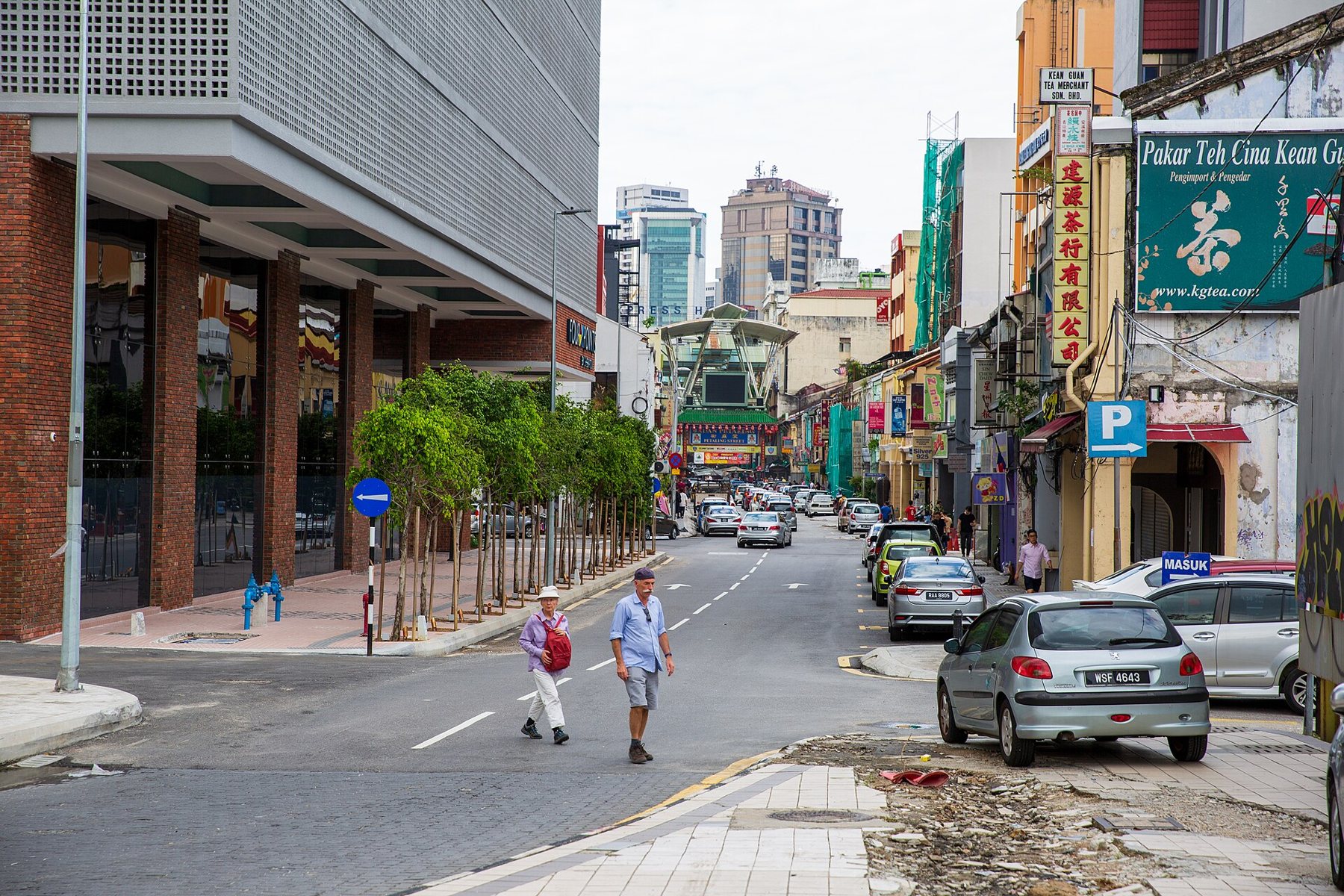
A short walk south, Pasar Seni, the Central Market, is an Art Deco building from the 1930s that was once the city's main wet market and is now a centre for crafts, batik and souvenirs, with food stalls inside. Beyond it, Petaling Street, the heart of Chinatown, is a covered street of stalls selling clothes, accessories, snacks and fruit, with old shophouses, temples and coffee shops in the lanes around it. Both are busy, colourful and good for a first walk through the old city. Around Petaling Street, look for the Sri Mahamariamman Temple, one of the oldest Hindu temples in the city, with a tall, carved gateway tower, and the Chinese temples tucked among the shophouses, a sign of how closely the city's communities have always lived.
Money and payments
The local currency is the ringgit. Cash machines are widespread, and money changers in malls and the old city often give better rates than banks for exchanging cash. Cards are accepted in malls, supermarkets and many restaurants, and payment by phone using QR codes is now very common, even at some stalls, though it usually requires a local bank account or a particular app. For a month, a mix of cash and card works well.
Small things for a first week
- Carry some small notes and coins: many stalls and markets take cash only, though card and phone payments are growing fast.
- Keep an umbrella with you; it is useful for both sun and rain.
- Note your building's address in Malay as well as English for drivers.
- Find the nearest clinic and pharmacy in your first week.
With the errands done, the month can begin properly. A good next step is finding your nearest night market.
Every photo on this page was shared under an open licence. Names, licences and original files are on pictures on the tags.