In a month's routineGo on a weekday morning early in the month, before the heat and the crowds, and come back for Thaipusam if your stay falls in January or February.
A short ride north of the city centre, about thirteen kilometres away at the end of a branch of the suburban railway, a great limestone hill rises abruptly from the surrounding streets, its cliffs streaked and hung with vegetation. Inside it are caves, and in the largest of them, reached by a long flight of steps, is one of the most important Hindu shrines outside India, dedicated to the god Murugan. Batu Caves is the easiest and most memorable day trip from Kuala Lumpur, and best done early.
Getting there by train
KTM Komuter trains run from KL Sentral to Batu Caves, the terminus of the line, in under an hour. The station is right at the foot of the hill, so you step off the train and into the temple grounds. Trains are less frequent than on the city's metro lines, so check the timetable and aim for an early departure; the first trains of the morning are usually quiet. A transit card or a ticket from the station machines will get you through the gates.
Going early has real advantages: cooler air for the climb, softer light on the statue and the steps, and fewer crowds. By late morning on weekends and holidays, the site can be very busy.
The statue and the steps
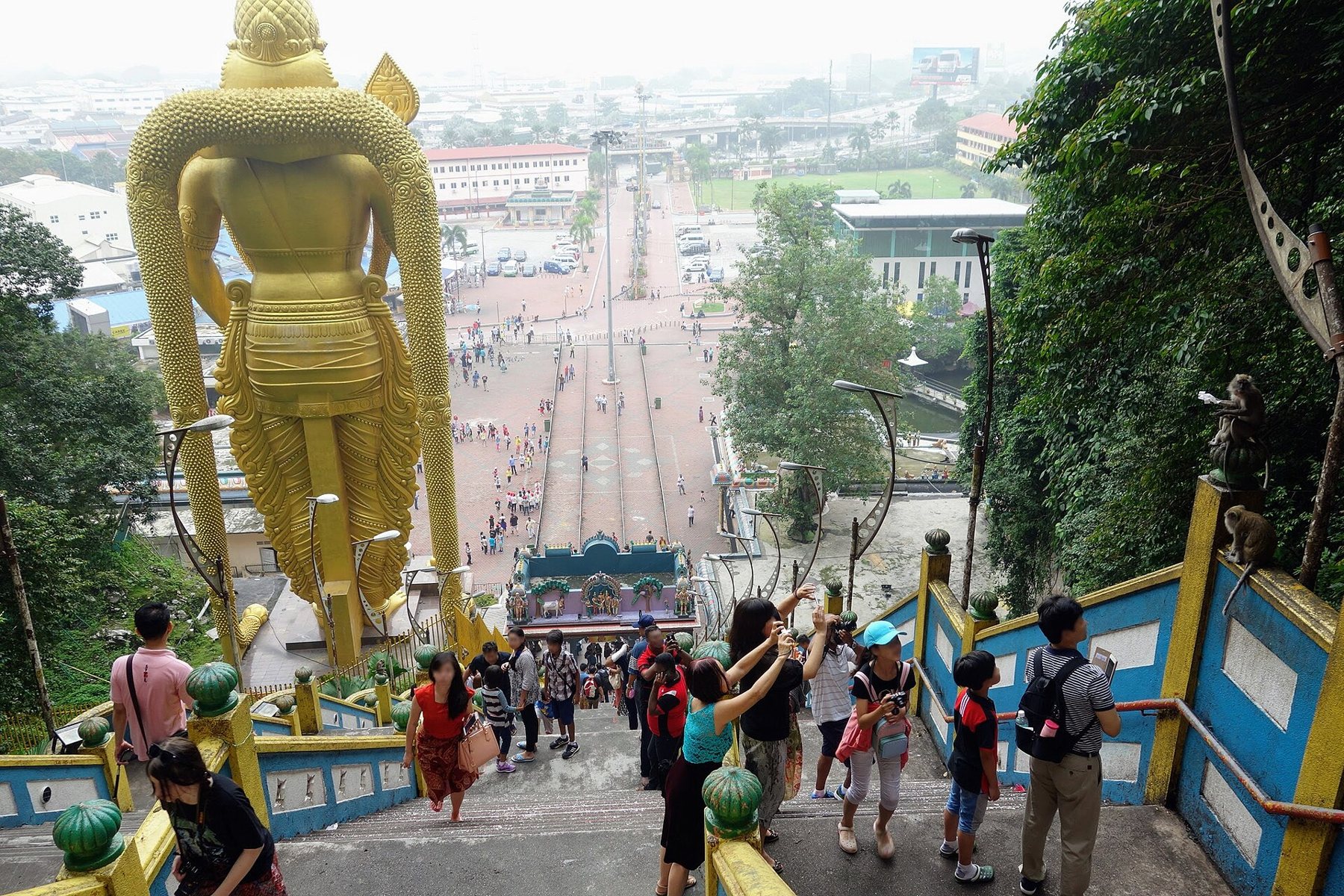
At the foot of the steps stands a giant golden statue of Lord Murugan, more than forty metres tall, unveiled in the mid-2000s and one of the largest statues of a Hindu deity in the world. Beside it, a long flight of 272 steps climbs steeply to the mouth of the main cave. In recent years the steps have been painted in bright rainbow colours, making them one of the most photographed sights in the country.
The climb is steep but short, with handrails and places to rest, and the view back over the statue and the city from the top is the reward. Take it slowly in the heat, carry water and watch your footing, especially on the way down.
The Temple Cave
At the top, the steps lead into the Temple Cave, a huge chamber in the limestone, open to the sky in places where the roof has fallen in, letting shafts of light fall onto the floor. Shrines and small temples stand inside, with priests performing prayers, the sound of bells and the smell of incense and camphor. At the far end, more steps climb toward an opening where daylight and greenery spill in, and swiftlets dart in and out of the cave roof.
The cave has been a place of worship since the late nineteenth century, when a temple was founded here by a member of the Tamil community. It remains an active temple, and visitors should behave as they would in any place of worship, quietly and without blocking the way of those who have come to pray.
Going early has real advantages: cooler air for the climb, softer light on the statue and the steps, and fewer crowds.
Dress, monkeys and manners
A dress code applies at the temple: shoulders and knees should be covered. Sarongs or wraps can usually be rented or borrowed at the foot of the steps if needed. Remove shoes where signs ask you to. Ask before photographing people at prayer, and do not touch the shrines or the offerings placed before them.
Long-tailed macaques live around the hill and on the steps, and they are bold, quick and clever. They snatch food, drinks, bags and even sunglasses. Keep food out of sight, close your bags, do not feed them and do not try to take back anything they grab. Give them space, especially mothers with babies. Pigeons crowd the square at the foot of the steps too, and vendors sell seed to feed them.
Thaipusam at the caves
Batu Caves is the centre of Malaysia's celebrations of Thaipusam, a Hindu festival honouring Lord Murugan, held in January or February, its date set by the Tamil calendar. In the days around the festival, huge crowds of devotees and visitors gather, many walking in procession from the city. Some devotees carry kavadi, elaborate decorated frames, as acts of devotion and penance, sometimes with hooks and skewers piercing the skin, and climb the steps to the cave in fulfilment of vows.
It is an extraordinary sight and a deeply religious occasion, preceded for many devotees by weeks of fasting, prayer and abstinence. If you attend, go with respect, follow the guidance of organisers and police, expect enormous crowds and heat, and plan transport carefully, as trains and roads are packed.
Who Murugan is
Murugan, also known as Subramaniam or Kartikeya, is a Hindu god of war and victory, the son of Shiva and Parvati, especially beloved by Tamil Hindus. He is often shown as a youthful figure holding a spear, the vel, and riding a peacock. Temples to him stand on hills across South India and among Tamil communities around the world, and Batu Caves, with its hill and cave, fits that tradition. Understanding a little about him makes the shrines inside the cave more meaningful.
The limestone hills
The hill at Batu Caves is one of many limestone outcrops scattered across the Malay Peninsula, remnants of ancient coral reefs and sea beds, pushed up and eroded over hundreds of millions of years into steep towers riddled with caves. These hills are islands of unusual life, home to plants, snails and other creatures found on a single hill and nowhere else, and many are threatened by quarrying. Batu Caves itself has been the subject of long campaigns to protect it from development.
Stalls, shoes and timing
There are food stalls and restaurants at the foot of the hill, many serving South Indian vegetarian food, and shops selling flowers, offerings and religious items. Toilets are available near the base. Allow two to three hours for the climb, the cave and the area around the foot of the hill. In the afternoon, storms often build over the hills, and the steps become slippery in rain.
Other caves and the hill
Other caves around the hill include the Ramayana Cave, with colourful painted figures telling scenes from the Hindu epic, and smaller temple caves at the foot of the hill. Some caves on the hill have been closed or restricted at times for conservation and safety, as the limestone is home to rare species, including bats and invertebrates found nowhere else. Check what is open when you visit.
After the caves
A morning at Batu Caves leaves the afternoon free. Back in the city, the Komuter returns to KL Sentral, close to Brickfields for a banana-leaf lunch. For a longer escape, see two nights in Melaka or the cool air of Fraser's Hill.
Every photo on this page was shared under an open licence. Names, licences and original files are on pictures on the tags.